12001 N MacArthur Blvd., Oklahoma City, OK 73162

A Closer Look Without Surgery
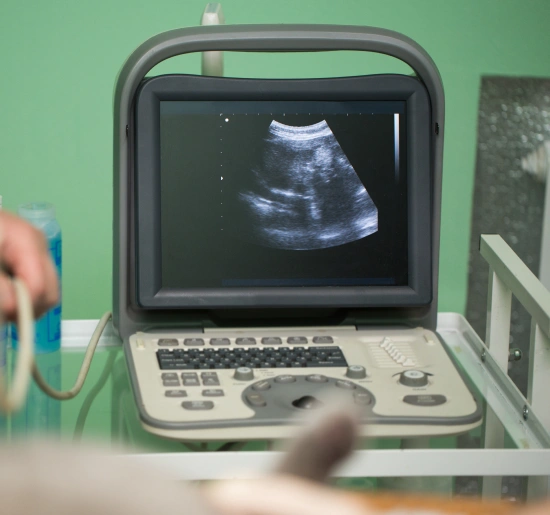
Bloodwork and X-rays answer a lot of questions, but sometimes they raise new ones. When that happens, ultrasound gives our veterinarians a real-time, detailed view of soft tissue and organs that other diagnostics simply cannot capture. At Warwick Animal Hospital, we use ultrasound to fill in the gaps for dogs throughout Oklahoma City, helping us move from a suspicion to a confident diagnosis. Because ultrasound is non-invasive and does not use radiation, it is a comfortable option for dogs of any age, including those who may not be the best candidates for sedation or surgery. Whether your dog is being evaluated for a new symptom or monitored for an existing condition, ultrasound often gives us the clearest next step forward.
What Ultrasound Can Reveal
Ultrasound is most commonly used to evaluate your dog's abdomen, giving us a level of detail that other diagnostics cannot provide.
An abdominal ultrasound lets us examine organs like the liver, kidneys, spleen, bladder and intestines in detail. It is often the next step when bloodwork shows an abnormal organ value, when a mass is felt during a physical exam, or when a dog has ongoing vomiting, weight loss or changes in appetite that have not been explained by other testing. We can also use ultrasound guidance to collect a sample from a mass or organ for further testing, often without the need for more invasive surgery.
When We Recommend an Ultrasound
Our veterinarians may suggest an ultrasound in situations such as:
- Abnormal bloodwork results that need a closer look at organ structure
- A mass or lump found during a physical exam
- Ongoing vomiting, diarrhea or weight loss without a clear cause
- Suspected bladder stones or urinary blockages
- Monitoring a previously diagnosed condition over time
Getting Ready for Your Dog’s Ultrasound
Here is what to expect leading up to and during your dog's appointment:
Fasting beforehand.
We typically recommend withholding food for several hours before an abdominal ultrasound, since a full stomach can make it harder to see certain organs clearly.
1
A small area is shaved.
Clipping the fur where the probe will be placed allows for a clearer image and better contact with the skin.
2
Gel is applied.
A small amount of ultrasound gel helps transmit sound waves for a sharper picture.
3
Your dog stays comfortable.
Most dogs tolerate the exam well without sedation, though anxious or particularly wiggly dogs may benefit from mild sedation to stay still.
4
Results are reviewed the same day.
In most cases, our veterinarians can go over the initial findings with you before you leave.
5
Why We Often Pair Ultrasound with Other Diagnostics
Ultrasound rarely works alone. Combined with bloodwork, urinalysis and sometimes X-rays, it gives our veterinarians a much fuller picture of what is going on, which often leads to a faster, more confident diagnosis and a treatment plan built around what your dog actually needs, rather than a guess.
If something about your dog's health does not quite add up, ultrasound can often provide the clarity needed to move forward with a plan. Schedule an ultrasound consultation at Warwick Animal Hospital today.